

Sweet Charity 60 No. 2 - Opening Night


The original Broadway production of Sweet Charity, composed by Cy Coleman with lyrics by Dorothy Fields and book by Neil Simon, opened on January 29, 1966, at the Palace Theatre. The production played 10 previews and 608 performances before closing July 15, 1967, earning nine Tony Awards with Bob Fosse winning Best Choreography.
Based on the screenplay Nights of Cabiria by Federico Fellini, Sweet Charity follows the adventures of a New York taxi dancer with an open-hearted but unlucky in love. The musical has been cemented in the musical theatre canon with songs such as "Big Spender," "If My Friends Could See Me Now," and the seminal choreography for "Rich Man's Frug." The original production was conceived by Fosse for his wife, Tony winner Gwen Verdon, who played Charity.
Source: Playbill
Excerpts from an opening night review by Stanley Kauffman in the New York Times, 1966.
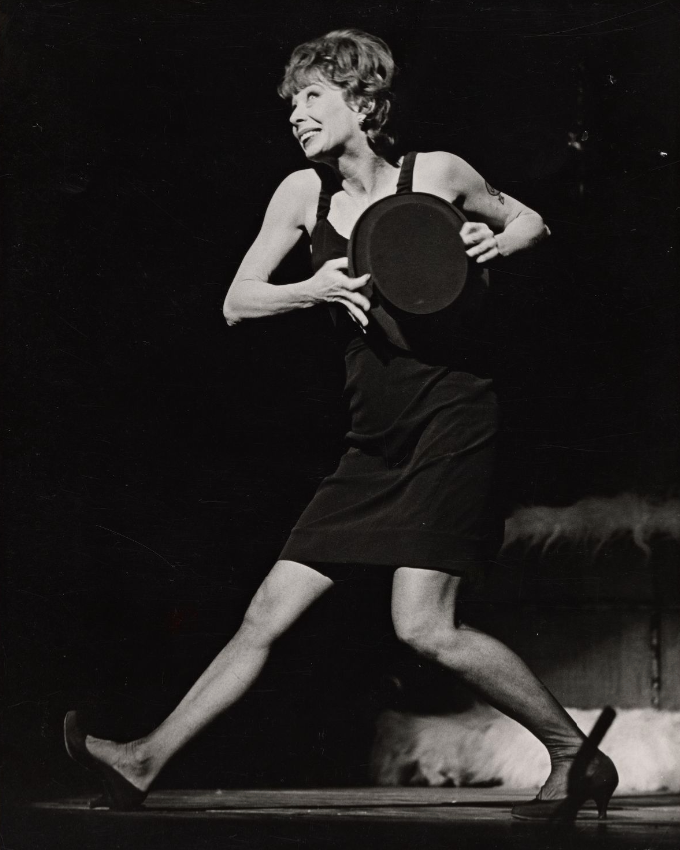
"Gwen Verdon, in the name role, appears in silhouette and dances forward as title “credits” are lowered from the flies. The signs read: ‘The Story of a Girl Who Wanted to be Loved.’
"From the first game-gamine appearance, as we follow Charity through her first betrayal, her glimpse of glamour through an encounter with a film star, her meeting with Mr. Right who eventually does her wrong, up to the very last scene where she literally pleased on her knees for affection, there is scarcely any let-up in this show’s appeal to us to smother it with love. Wistful, coy, tremulously plucky, Charity tugs and tugs and tugs at our hears, and the exercise builds up some pretty stiff resistance.
"Miss Verdon as Charity, has a marathon role in which she is rarely off stage. She is a first-class performer: a good singer, an excellent dancer, a thorough, stage-taking professional.
"Mr. Fosse’s staging of numbers is often superb. ‘Big Spender,’ in which the hostesses line up at a railing that has arisen just behind the footlights, is a splendid mobile frieze of floozies. ‘Rich Man’s Frug’ and ‘Rhythm of Life,’ the ‘religious’ beatnik number with a sharp vocal arrangement, are electric uses of jazz. Mr. Fosse also employs nice silent-movie touches—subtitles flashed over head, stopped motion, a little dance satire of film comedy (executed by Miss Verdon).
"Robert Randolph’s lighting and settings are good. I particularly admired the airy outlines (apparently wrought iron) of trees and facades that are lowered from time to time against back-lighting. (Much of this show is done in silhouettes with lighting from back and sides; and Mr. Fosse has conceived much of the dancing and staging with emphasis on elongated profile arrangements.)


Comments