top of page


NYCB Vol. 19 No. 9 - The Concert & Mr. B
Balanchine (standing front, holding chair) and Tanaquil LeClercq (behind with arms lifted). Photo by Martha Swope, 1956. "George Balanchine, artistic director of the New York City Ballet and choreographer de luxe, made an unprogrammed appearance in the cast of Jerome Robbins’ new ballet, ‘The Concert,’ at the City Center last night. Because of the illness of Todd Blender, MR. Balanchine took over the mid portions of his role, and Robert Barnett stepped into the dance portions

Lauryn Johnson
11 minutes ago


NYCB Vol. 19 No. 8- The Concert, Francisco Moncion
Francisco Moncion. Photo by Martha Swope, 1972. "An image I treasure is that of [Francisco] Moncion fluttering around like a demented butterfly with a cigar clamped between his teeth, like Broderick Crawford cast as The Queen of the May. Robbins's humor is brilliantly and specifically American..." --Joseph H. Mazo, Women's Wear Daily, 1971 Francisco Moncion. Photo by Martha Swope, 1972. Moncion: "It's fun to do sometimes, but you have to really work yourself into the mood, br
Lauryn Johnson
1 day ago


NYCB Vol. 19 No. 7 - La Source
"Yes, there is something of the Paris Opera Ballet and the 19th‐century about the ensembles in the New York City Ballet's 'La Source.' With so many pretty girls in pink tutus waving their arms and kicking their legs to Leo Delibes's music, one can just hear a Comte de Cambriolage looking the field over from his box and asking about the third one from the left. "But if there is a touch of decadence about George Balanchine's musings on the 19th century French music from two Del
Lauryn Johnson
3 days ago


Vol. 19 No. 6 - La Source
"George Balanchine is very fond of referring to himself as a carpenter. At the New York State Theater Source," he showed his skill at joinery. 'La Source' is a work that combines his new 'Delibes' Pas de Deux with salient parts of the earlier 'Sylvia' Pas de Deux and Divertissement. The results are never less than interesting, but never more than agreeable. Violette Verdy. Photos by Fred Fehl, 1968. Harry Ransom Center. "The original pas de deux has been amplified by the olde
Lauryn Johnson
3 days ago


NYCB Vol. 19 No. 5 - Jewels, Diamonds
“‘Diamonds’ demonstrates the quintessential Balanchine, down to the last ballerina-worshipping hand kiss by her cavalier. In the ballet’s exquisite pas de deux, Peter Martins, every ince equal to his ballerina, and Suzanne Farrell turned out a truly great, especially well-bred performance.” —Anna Kisselgoff, New York Times, 1975 Suzanne Farrell and Peter Martins (Balanchine center). WNET Filming. Photos by Martha Swope, 1977.
Lauryn Johnson
5 days ago


NYCB Vol. 19 No. 4 - Jewels
Violette Verdy. Photo by Fred Fehl, 1967. "Gems may or may not improve with age, but there was no mistaking the enduring luster of George Balanchine's "Jewels" last night at the State Theater at Lincoln Center. "'Jewels,' the ballet that was born last season without a name, occupied the place of honor, opening the New York City Ballet's 45th season, which was a benefit for the Women's Division of the Federation of the Handicapped. "Like any product with vintage qualities, 'Je
Lauryn Johnson
5 days ago

NYCB Vol. 19 No. 3 - Jewels, Diamonds
“Suzanne Farrell wrote in her autobiography that when she first stepped onto the stage in the pas de deux, her guide was the "lonely" oboe that plays the adagio's major theme. Melancholy does indeed pervade the music, and so the dance. There's another kind of loneliness, too, which is odd considering the ardent attention paid to her by her partner. The ballerina in Diamonds moves in a kind of solitary splendor. She is not self-absorbed like the Paul character in Emeralds, but
Lauryn Johnson
Sep 23


NYCB Vol. 19 No. 2 - Jewels, Rubies
Patricia McBride. Photo by Jim Houghton “If there was any single part of Jewels that turned it into a smash hit, it was the pas de deux in Rubies. You simply don't know what extraordinary thing is going to happen next in this encounter between the frolicsome lass and her virile partner. One second, she's plunging forward with all her weight, so that her face touches the floor. Next second, she's in a backbend. One second, she stands upright on pointe. The next, she's practica
Lauryn Johnson
Sep 22

NYCB Vol. 19 No. 1 - Jewels, Emeralds
“Drifting past us on air currents, rather than meter, Emeralds seems to happen partly out of view, as though a shifting cloud cover separates the dancers from the audience. The atmosphere is one of restraint. The two principal women hold their arabesques low, while the ensemble raises their legs not once. Lifts end in deep pliés, like sighs. The women swoon. They hold dialogues with themselves. All is quiet, sometimes hushed. Sometimes one dare not breathe, lest one violate t
Lauryn Johnson
Sep 21


Anatomy of an NYCB Audience
Me, (Lauryn Johnson) ushering at NYCB. Photo by Rosalie O'Connor, 2025. I’m entering my 6th season as an usher at NYCB. I’ve worked approximately 800 NYCB shows. I’ve had a lot of time to observe. The stage, yes, but also the audience. I’ve learned a lot about human behavior—the good, the bad and the ugly. But I’ve also learned the NYCB audience is a unique and living organism. If you love this theater, this company, I hope you’ll read this ode to the audience and see what i
Lauryn Johnson
Sep 21


NYCB Vol. 18 No. 6 - Agon, Diana Adams
Diana Adams on Agon: “I don't remember ever sitting around discussing dancing with him. Even with something like Agon, I tried not to analyze, because then I might give too much significance to a gesture, like when I put my hand on Arthur's wrist. I knew it wasn't meant to be a sentimental gesture. It had to do with part of a movement and I would spoil it if I started to think about it. In Agon the movements were so intricate that you really didn't think in terms of whose li
Lauryn Johnson
Apr 30


NYCB Vol. 18 No. 5 - Agon, Arthur Mitchell
Arthur Mitchell & Diana Adams. Photos by Martha Swope, 1957 Diana Adams remembers that Balanchine wanted to compose the pas de deux before setting any of the other dances; this implied to her that he felt it would give him the key or approach to the rest of the work. Says Mitchell of that famous part, "The pas de deux is like seeing live sculpture. Before your eyes, the dancers move from one fantastic pose to another, but you don't know how they got there. Balanchine said, "T
Lauryn Johnson
Apr 28


NYCB Vol. 18 No. 4 - Agon, Wendy Whelan
Albert Evans and Wendy Whelan. Photo by Paul Kolnik Wendy Whelan describes the impression that Balanchine's Agon made on her when she saw it for the first time at age 14, while spending her first summer in NYC as a student. "That summer, I witnessed ballerinas spinning across the stage so ridiculously fast that I almost felt blinded by them. I was spellbound by a team of Amazonian women in red kilts kicking their legs so high and with such attack that it left me breathless. I
Lauryn Johnson
Apr 28


NYCB Vol. 18 No. 3 - Agon, Edward Villella
Photo by Martha Swope, 1958. From Edward Villella's autobiography Prodigal Son: Dancing for Balanchine in a World of Pain and Magic "One day Balanchine stopped me and matter-of-factly told me that I was going to be the understudy for Todd Bolender in Agon. I thought this was terrible news. Agon was probably the single most complicated work in the history of classical dance up to then. I was still trying to adjust to the sounds of the music. It was the first time I had been ex
Lauryn Johnson
Apr 26


NYCB Vol. 18 No. 2 - Symphony in C, Edward Villella
Edward Villella and Patricia McBride. Photo by Fred Fehl, 1961. Harry Ransom Center. Edward Villella on Symphony in C: “I loved ending with this ballet. It was something I knew I could really do—it suited my abilities. I could hear the audience gasp and hear the round of thunderous applause when I made my first exit during the movement. The gasp and the applause rang out again when I did the repeat. It stirred me up, higher than I'd ever been. (left) Francisco Moncion & Melis
Lauryn Johnson
Apr 23
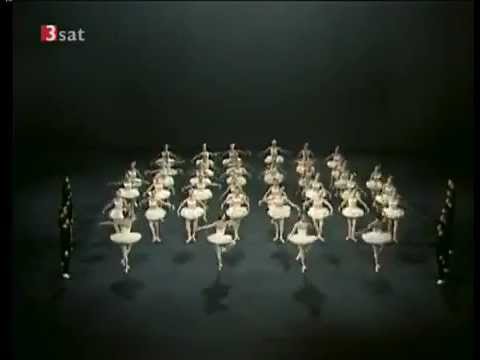
NYCB Vol. 18 No. 1 - Symphony in C
"If there ever was any doubt that Balanchine was the greatest choreographer of our time, this doubt was dispelled when the curtain came down on his Symphony in C. Here is a classic ballet that will go down in history as the finest example of this thrilling art form. “Symphonic ballet at its greatest, it builds with ever-mounting force to a thrilling cli-max. The fifty dancers on the stage at the same time not only give exhilaration to the final movement of the ballet, but mak
Lauryn Johnson
Apr 21

NYCB Vol. 17 No. 11 - Antique Epigraphs
Written by Anna Kisselgoff, New York Times , 1984: "What could any choreographer nowadays do with imagery of Ancient Greece that would not look like a cliché? Jerome Robbins supplied the answer at the State Theater with beauty and subtlety Thursday night in the world premiere of his "Antique Epigraphs" for the New York City Ballet. "Rarefied in tone but immediate in resonance, ‘Antique Epigraphs’ is, above all, a work rich in associations. Some of these pertaining to the musi
Lauryn Johnson
Feb 1


NYCB Vol. 17 No. 10 - Serenade, Jillana
Jillana in Serenade. Photo by Martha Swope, 1959 Jillana in I Remember Balanchine : “My fondest memories are of Serenade. I loved doing the Dark Angel. Even though there was no real story in it, I always had a story. I would make up different ones when I danced it, and I danced all the parts from top to bottom. I would make up stories about being in love with Nicky Magallanes and trying to get him away from whoever the other girl was, pulling and pushing. I made it into a lov
Lauryn Johnson
Jan 31


NYCB Vol. 17 No. 9 - Antique Epigraphs
Stephanie Saland, Simon Schumacher, Helene Alexopolous, Jerri Kumery, Kyra Nichols, Maria Calegari, Victoria Hall, Florence Ftizgerald. Photo by Martha Swioe, 1984. Anna Kisselgoff, New York Times , 1984 “The curtain rises on eight women, standing in profile in single file to the right of the audience. The azure blue surface of a bright Aegean Sea or its dazzling southern sky dominates the opening moment, introducing this Hellenic world of the imagination. “The all-female ca
Lauryn Johnson
Jan 31


NYCB Vol. 17 No. 8 - Le Tombeau de Couperin
Wilhelmina Frankfurt & David Richardson. Photo by Martha Swope, 1976. NYPL In 1976 at the Maurice Ravel Festival, Balanchine premiered the ballet, “Le Tombeau de Couperin.” Anna Kisselgoff declared, this ballet was, “was the masterpiece of the [Ravel] Festival, a ballet that deserves to endure with the best of the Balanchine repertory and one whose creative and intellectual underpinnings are first-rate. “In ‘Le Tombeau de Couperin,’ Mr. Balanchine has used the 18th-century c
Lauryn Johnson
Jan 25
bottom of page