

NYCB Vol. 17 No. 2 - Prodigal Son - Prokofiev's Diary


The most complete account of the creation of the original Prodigal Son ballet is found in the diaries of Serge Prokofiev, the composer of the ballet. From his commission in October, 1928 to premiere in May, 1929, his entries describe the personal animosity that existed between himself and Balanchine, which partly explains why Balanchine was so apathetic about reviving the ballet for NYCB decades later.
Excerpts from Sergey Prokofiev diaries, 1924-1933 : Prodigal Son :
October 28, 1928
In the course of a third meeting Diaghilev and Kokhno set out for me a subject of the desired ballet: the parable of the Prodigal Son, to be recast on to Russian soil. The eloquence of both men was very persuasive. Asafyev was jubilant, sensing that Diaghilev had divined exactly what I needed at the present time. I too like it. And although I have never wanted to work with Kokhno, I believe I will accept the scenario. Diaghilev attributed the version to Kokhno, but I am sure that three-quarters of it comes from Diaghilev.
November 10, 1928
I at once set to work on the ballet. I had some themes ready, that I had composed in the spring and summer. I also found, when looking through my sketchbook, some I had written earlier that were ideally suited for the purpose. New ideas also came easily to me. In short, I was fully armed for combat. After a few days I even began to feel that I had stockpiled so much music that was printed but not performed that perhaps it was time to pause a little and review where I stood? Yes, but only once the ballet was done. And this was a project I thought I would be able to achieve quickly and early.
November 12-18, 1928
I worked intensively on the ballet all week, mainly in the mornings, but also some in the afternoons and evenings. The composition itself proceeded with exceptionally little effort, helped by the fact that I had decided to compose The Prodigal Son in a simple style eschewing sophisticated elaborations. Diaghilev's parting words to me had been: 'Your piano pieces are a shade arid. I want the ballet you are writing for me to be more straightforward.'
And that is what I was doing. By the end of the week it was clear that I had already cleared the halfway mark and that if I were able to maintain such a pace I would be able to roll up the whole thing in two weeks. This would be a tremendous feat, but it must be remembered that I had a clutch of themes derived from what I had jotted down in my notebook in the spring, and not only that but a whole number (the slaves) taken from the Matelote I had written for Romanov in 1925 (for which, incidentally, he has never paid me), as well as one theme for the second number from my sketchbooks of the same year. That said, the composition process was generally extremely trouble-free. It drove out all other activities, which perforce were compressed into the evenings.

November 19, 1928
I seem to be experiencing mild fatigue from all the composing, but I do not want to slacken the tempo, so as to finish the ballet inside two weeks.
November 22, 1928
Kokhno has at last worked out and sent from England a more detailed libretto for Prodigal Son. But all the major lineaments of the ballet have already been composed. This is fine: the music having been written before the arrival of the libretto means that I have no connection with the libretto, especially as far as the future is concerned. Kokhno has dreamed up some new details, some of them rather silly.
November 23, 1928
As Diaghilev is back from England, I telephoned him at the Grand Hotel and told him I had almost finished the ballet. Diaghilev was so taken aback he could scarcely believe his ears. 'So, then, it can't be ... much good?’ he asked, adding that he would come this very day to listen to it. I composed a bit more during the afternoon, tidied it all up, and went through the ballet on the piano so that I would be able to play it.
[…] I shut the door and played Diaghilev the excerpts from the ballet I had composed. He was tremendously taken with the first and second numbers, the robbing and the awakening of the Prodigal, and the music for his return. But he was a lot less keen on the Siren and her pas-de-deux with the Prodigal, and he suggested dispensing altogether with the Romanov Matelote. 'You obviously haven't noticed that this is in an altogether different style. You write with such tenderness these days, but then you were so given to hammering in nails.'
I had not yet conceived the end of the ballet. I said, 'In this libretto the end is envisaged as a kind of apotheosis, but this is inappropriate: we need something more nuanced.' I suggested borrowing a theme from the second Chose en soi, which I love very much, but Diaghilev was reluctant to accept this. 'It should be simpler,' he said. 'Softer and more tender.' And indeed I felt myself that the theme I had suggested was not quite right. We parted on good terms, Diaghilev happy with what he had heard of the ballet. Later that night, falling asleep, I was still searching for a new theme, limpid and unclouded. I thought that a melody illustrating a parable from the Gospels should seem to be coming from on high. About one o'clock at night I got up and jotted down two bars.
November 24, 1928
Straight away in the morning I worked on the idea that had come to me last night, the concluding scene of the ballet when the father embraces his son. My aim as I worked was to preserve the essence of the previous night's afflatus. The result was an absolutely superb theme, and all day I was walking on air as if it was my name-day. Home again, I savoured playing over my new theme which, as I walked along, I had not been able to remember in its entirety. It made it all the more enjoyable to renew the acquaintance!

November 30, 1928
Finished the tenth number, in which I combined three themes. Normally I am against this practice because it hardly ever sounds as it should do, but in the present case after so much homophonic music more complexity is essential to increase the tension in the lead-up to the Prodigal falling into the embrace of his father, and to highlight the introduction of my lyrical theme.
December 1, 1928
Diaghilev telephoned in the morning and asked if he could come back today and listen to the ballet again. I said he would be most welcome. 'Then Boris and I will come at five o'clock,' he said. There was nothing to be done: I was obliged to welcome Kokhno (Boris) as well, and having earlier promised myself that he would not hear a note of the ballet music until I was able to hand over the completed piano score.
I spent all day putting my manuscript paper in order that I would be able to play a decent rendition. This was all to the good: at least it impelled me to finish off some passages and stitch together some fragments that were still floating. Diaghilev listened with great concentration and I could overhear him from time to time whispering to Kokhno: 'Very beautiful... splendid ...'
But we had a real disagreement over the third number, the Temptress. My conception had been of a shadowy, mysterious being, seen through the eyes of an innocent youth, seductive but as yet unknown. Diaghilev, however, wanted a sensual creature, whom he proceeded to describe in a string of graphically obscene expressions. However, although I not the least bit inclined to involve myself with creating sensuous music I did not say as much to Diaghilev, contenting myself with observing that I had conceived the ballet in distinctly more aquarelle terms than those he was now suggesting, from which it followed that voluptuous excesses of this sort would be out of place. Diaghilev grew heated: 'Then what sort of prodigal son is this? The whole strength of the story lies in the fact that he goes astray,' then repents, and the father forgives. If all he had done was run away from home and got himself robbed blind by thieves, then his return would have been marked not by the outstretched arms of his parent but by a good thrashing. In the end this question was left unresolved, and I informed Diaghilev that I had completed the final number.
Diaghilev: 'What? Completely finished? Foo, how alarming..'
The implication was that Diaghilev was staking everything on the final number, and if I had fallen flat with it then the whole ballet would be written off as an unmitigated disaster. But I knew the ending was good, and was able to play it reasonably calmly. Diaghilev was pleased, and even suggested I play it more slowly so that the melody would sing out more beautifully. He also made me play the triple counterpoint combination slowly and judged it successful. Overall, Diaghilev departed highly satisfied, and going down the stairs announced that his dream was to have a spring season without including a note of Stravinsky. Incredible! Hitherto Stravinsky has been a god for Diaghilev, who never made any secret of his preference for him over me. Is this yet another sign of the god's fall from grace?
December 3, 1928
It was a struggle to compose today, nevertheless the opening of the new version of the third number (the Siren) suddenly came right, also the start of the ninth number. After all!
December 6, 1928
Made a start on the full score of Prodigal Son. It progressed easily, but it is amazing how necessary it is to get into training: after six or seven pages today my brain was too tired to do any more. But when I was orchestrating Fiery Angel I could get up to twenty pages a day.
December 11, 1928
Completed the orchestration of the first number. I thought I would be able to polish it off in a day, but it took four: I got stuck over the Father, and in any case did not devote very much time to orchestration work as I spent quite a lot of time at the piano. Now that I have decided I am going I have to be in form so as not to be a bundle of nerves when I walk out on stage.
January 14, 1929
I had just embarked on composing a mildly Mozartian theme for the fourth number when there was a telephone call from Diaghilev. I said, 'I would not have come to the phone for anyone else but you, because I am just in the middle of composing a new theme for you?' Diaghilev wanted to stop the conversation there and then, but I said it did not matter, I would remember it. He had just come back from Bordeaux and wanted to know what was news in Paris. I was flattered: it was an honour that had never before been vouchsafed me. However, I had been sitting at home almost all the time and so had little to communicate to him.

January 27, 1929
I have finally finished the development of the fourth number even though I'm not certain it is of top quality. Then, the reprise section as far as the coda came to me of its own accord, with several very happy inspirations. With breaks, I worked all day, and then put the coda aside until tomorrow. I am very pleased that this number is done, even with my reservations about the coda.
January 28, 1929
Finished the fourth number in a surge of activity, breaking all my fingernails in the process. I am extremely happy, because this section of the ballet has cost me not a little trouble and grief. Inertia carried me on into the succeeding number, in which I even managed to produce a little, or perhaps more accurately to get an idea of what I might do with it
February 1, 1929
Read proofs and composed some of the pas-de-deux, the outline of which have sketched out. I fear it is not quite what Diaghilev wanted; it's not passionate enough. He wants the exact opposite of what he was advocating to me in Rome in 1915. A trait he shares with Stravinsky is to insist with unassailable conviction that only such-and-such music is worth composing, and then a year later to maintain the opposite.
February 5, 1929
Yesterday I seem to have, unexpectedly, finished the fifth number. This the one I had been most afraid, either that it would not be successful, or that if it was Diaghilev would not approve of it. As it happened he rang up and said that he would like to come to listen to the new numbers. I asked him to do this tomorrow, hoping that by then I would have finished No. 6.
February 6, 1929
A bad headache, most untimely as I wanted very much to finish the sixth number before the arrival of Diaghilev, and practice playing through what I had already written without splitting too many notes. But instead I had to go for a long walk to make sure my headache did not get worse. At five o'clock Diaghilev came, accompanied by Kokhno, Lifar and Nouvel. Diaghilev was in the sunniest of moods and showered Ptashka with compliments. He asked me from whom he might commission a new ballet if Hindemith did not produce one in time. What could I tell him of Martinủ? Or Villa-Lobos?
I tried to give him some information about the latter, recommending him but with some reservations. Mention of Dukelsky would not have been appropriate, now was not yet the time. I played Nos. 4, 5 and 6, none of which Diaghilev had yet heard, and to my amazement he approved of all three. I was pleasantly surprised as I had feared the pas-de-deux' would be judged too amoroso, also I was expecting to be told that a sonata-allegro (No. 4)* had no place in a ballet. Diaghilev did have some pertinent observations on the pas-de-deux, namely that it should have a slower tempo and therefore its material would need to be shortened, which I said I could do. Kokhno then proceeded to think up aloud a scenario for the fourth number which had so unexpectedly come into existence. In this endeavour he had several 'genius ideas' which, however, he as precipitately retracted.
Light was clearly dawning gradually that the genesis of a subject was not after all such a simple matter, and there ensued in consequence voluble protestations about there being something, somehow, not quite right about the music, that in short it was not really danceable. The problem seemed to be the distinctly feminine cast of the second subject, but the Siren, who at that time was already on stage, could not be introduced into it because the whole idea of the number was to separate her two dances. And to bring in another woman would be to divert attention from the first, which would also not be desirable. Luckily attention shifted to the other numbers and the question was shelved. Obviously Diaghilev and Kokhno After three hours of playing and impassioned discussion my head was threatening to split into a thousand pieces, and I called off going to the Samoilenkos to play bridge. But by midnight my headache had gone.
7 February, 1929
My head felt wonderfully clear this morning, and not only did I fulfil all the suggestions Diaghilev had made (including expanding the conclusion of the ballet), I also finished the sixth number, completing in other words the composition of the work. All that is left is to orchestrate three of the numbers, and of course to stitch together the fourth number in consultation with Diaghilev. I took a look at this number: its components are as if screwed together, and it can be taken apart and reassembled at will. In its present form it can serve as a sonata-allegro for my Fourth Symphony, but for the ballet it can be however Diaghilev wants it. My mood was good and my spirits high.
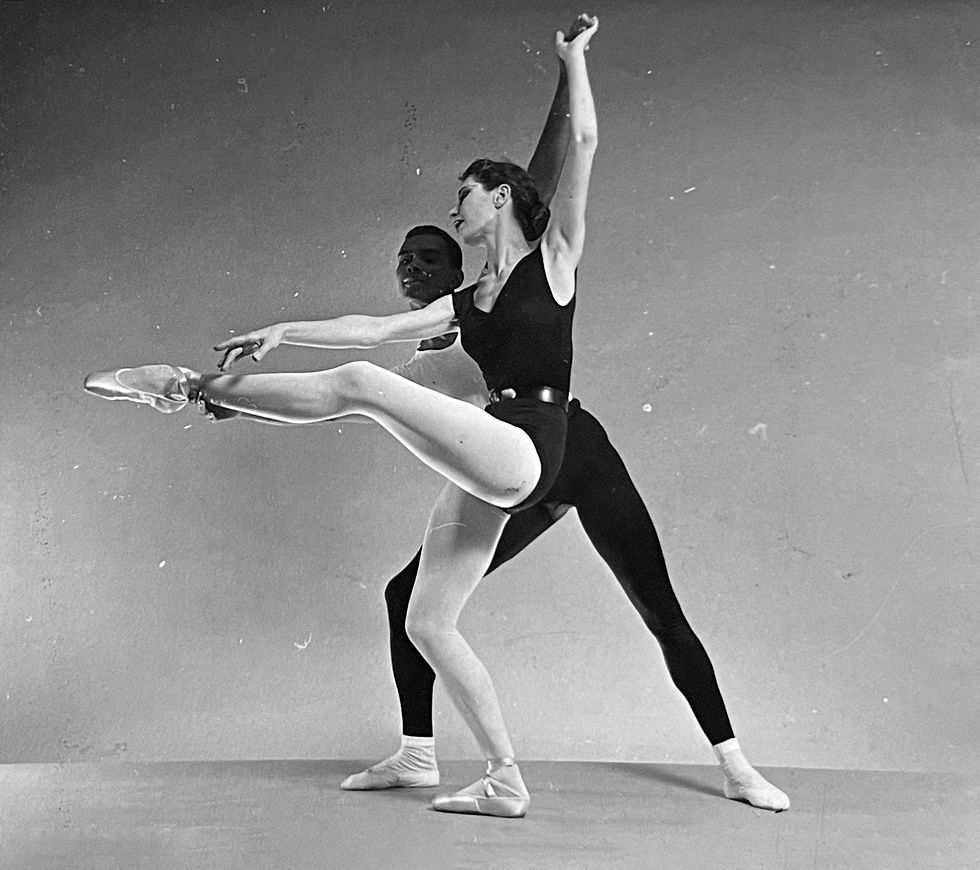
Photos by Roger Viollet, 1929.
17 February, 1929
C.S. Church in the morning, followed by more orchestration. Diaghilev came at five o'clock, this time on his own. He has finally decided to rent an apartment for himself in order to have somewhere to put his collection of antiquarian books, and is also installing Kokhno and Lifar in it. He is trying to secure Matisse to do the settings for Prodigal Son, but this is proving difficult as you cannot get access to him: Matisse is the most expensive painter these days, he is painting pictures and putting them in the bank because after his death their prices will immediately jump to ten times their present level. Putting together the two facts that Diaghilev has taken to visiting the circus' and that he enquired whether I happened to have a copy of the piano score of Renard, I deduce that he is planning to present it. So much for the vaunted prohibition of Stravinsky. And what about Chout?
I then played him the pas-de-deux in which he again identified the need for a cut, which I was glad to accept since now I can incorporate the excised passage into the Symphony? As for No. 4, it elicited the expected groans about the music not being good to dance to, that the scenario called for a bellicose kind of number whereas this music did not lend itself to anything particularly distinctive (of course, any music can have something or other staged to it'). I said, 'On the contrary, I have always considered that in this number there is much eminently danceable music, and if anything really isn't suitable I can take it out for you.'
Diaghilev: 'Not everything that is fast and rhythmically accented is
danceable.'
This made me angry. I notice that no one pointed this out at the beginning; only when Kokhno could not invent a scenario was it discovered that the music is not good for dancing.'
Diaghilev: 'There's no need for a scenario at this point. All we need is some strong, vivid music because what I want is for it to be danced by the two best dancers. But if there is no brilliant framework for them they will not dance it. I know what will happen: I will give my orders and they will obey, but half an hour before the performance they will suddenly discover they have pulled a tendon and cannot perform.'
March 7, 1929
A new theme came to me for the fourth number of the ballet, the section of the work most in contention. I do not yet know whether the theme is good, but in any case it is not an everyday sort of tune When I got home there was a telephone call from Diaghilev. Negotiations have completely broken down with Matisse and the settings will be commissioned from Rouault. I have not heard of Rouault, but Diaghilev says that he is top drawer. As, however, he tends to say about whomever he settles upon.
March 10, 1929
Around five o'clock Diaghilev appeared, accompanied by Kokhno and Lifar. I played No. 4, stumbling and making mistakes as it was written out on manuscript paper that already had multiple crossings-out. Personally I did not like it very much, but Diaghilev and company were pleased with it, asked for one passage to be cut, and overall judged it excellent, ready to be orchestrated. At this point Rouault was announced, a red-faced gentleman in his mid-fifties, somewhat toad-like in appearance. I played the entire ballet including the new number - its first complete, integrated performance.
While I was playing Diaghilev explained various details of the drama in a loud voice; the chattering did not particularly bother me since Diaghilev had warned me that Rouault has no understanding of music and the play-through was merely for form's sake. During the final number I noticed that Rouault had fallen very quiet and was breathing heavily, as if asleep. When the performance was over he began to speak of a rose-coloured minaret that he was thinking of for the decor, then about Matisse and about Moreau while Diaghilev told a story about having invited Renoir to his box for a performance of the Ballets Russes, to which Renoir had come attired in a black frock-coat, red knitted gloves and a cap with an inordinately long peak. Ptashka noticed that Rouault was wearing new patent-leather shoes, but his socks were falling down and wrinkled, and in one place his flesh could be seen through a hole. As we were saying goodbye it emerged that in ten days' time Diaghilev wanted to take Rouault to Monte Carlo, as in Paris people will not leave him in peace to work. 'Splendid, I cried. T'll take you there in my car. At this the company dispersed, and Diaghilev invited Ptashka and me to lunch tomorrow so that afterwards we could go to look at Rouault's paintings.
May 2, 1929
Stayed put and worked on conducting: after a seven-year lacuna I have to get myself back in form, although I must beware of being too energetic, as I cannot be sure how much my heart will put up with. Lately it has been behaving itself; I have been quite unaware of it.
Finished the second Prodigal Son proof.
Leon Woizikowsky and Anton Dolin. Photos by Roger Viollet, 1929.
May 10, 1929
First orchestral rehearsal for Prodigal Son. Désormière took it while I sat with the score. Everything sounds clear and secure; no changes are needed Désormière took it all at a slow tempo and Diaghilev, who had come in to listen, joked to Larionov, 'What sort of a ballet is this supposed to be, al Adagio! Doom and gloom!' When tunes came that I had given to the violin. or cellos, he exclaimed, 'What's all this? Cellos singing? Violins too? Wha would Igor say?' Diaghilev was relishing the fact that the cellos had melodie: to sing, savouring in anticipation the disgruntled criticism of the dry anc dogmatic Stravinsky.
When I requested a box, as Koussevitzky had asked me to invite him Diaghilev replied that I could have two seats in the stalls, which angered m very much. I countered: 'Respectable establishments usually allocate a box to the composer.' But Diaghilev is being stingy; tickets cost 200 francs and sale: are going through the roof. Prodigal Son has had an unprecedented sever advertisements. Le Pas d'acier had
May 18, 1929
Early in the morning I was already at the rehearsal of Le Pas d'acier and Prodigal Son. The ballet company was also on call, but were not ready by the time the rehearsal was due to start, so Désormière suggested using the time to work through problematical passages in Prodigal Son. I agreed, and he immediately found himself just as caught out by the 5/4 number as I had been at the previous session. But Désormière is more experienced than I am: he took the music apart, went back to the beginning playing it slowly, and after twenty minutes the piece began to flow properly. During Le Pas I made a series of comments about keeping the tempo slow, as it had been very hurried at last year's performances
After the break I took my place on the podium for Prodigal Son with the dancers on stage. It was premature, as the orchestra is still playing very roughly. For me the potential stumbling block was still the 5/4 number, and this I conducted using short gestures, à la Koussevitzky, knowing it almost by heart. It went better. By the end of the rehearsal I was tired but my heart was behaving itself. When I got home I felt I had earned a holiday, and did little further work. I did not watch what was happening on stage, but Ptashka reported that the women's dances contained more than a little indecency, which certainly does not conform to the biblical account. This is the result of Diaghilev spending his time swanning about Paris with Markevich, while Kokhno and Balanchivadze were unable between them to devise any movements other than suggestive ones. This is completely at odds with my music and with Rouault's scenery, which is very powerful and biblical in feeling.

May 19, 1929
In the afternoon I went to the Prodigal Son choreography rehearsal. Because rehearsals have been taking place in various places I had to go to four halls in four different parts of the city before I found it. I went mainly on my own account, in order by conducting it to establish definitive tempi, but as it turned out the production itself has a mass of lacunae: the sisters in the final number do not enter on time; the penultimate number, the music for which is all leaps and syncopations, has been constructed with flowing movements; in the second number there is no correlation between the entrance of a character and the emergence of a new theme, and so on. I made my thoughts known to Balanchivadze and to Kokhno, and when he arrived to Diaghilev. Some adjustments were easy and could be put into effect, but it was too late for more complex ones as the general rehearsal is tomorrow. I said it would be desirable to moderate the lasciviousness of the Siren's dance: a loose woman in biblical times would not have behaved in the same way as a modern prostitute, the representation must be refracted through the prism of the intervening centuries. I fear, however, that my words will have fallen on deaf ears and therefore came back from the rehearsal depressed.
May 20, 1929
General rehearsal of Prodigal Son in the morning. I arrived at a quarter to nine, but Désormière announced that he would start with Rieti's Le Bal. I just about to take myself off to the café when it transpired that Rieti was late bringing his score, so Désormière proposed a closer look at some passages from Prodigal Son. Although Rieti chose that moment to appear, to punish him for being late Désormière worried away at Prodigal Son for forty minutes, which was extremely valuable, and only then turned to Le Bal.

Meanwhile Diaghilev stood on stage supervising the hanging of the scenery, checking the costumes and lighting, and so on. Once again I approached Diaghilev and Kokhno with a view to getting the lubricious elements toned down, but all I got in response was a muttered 'Yes, yes, we'll have to think about that..' I badgered Rouault about it, told him of my concerns, and he was most willing to support me: 'I myself do not approve of the sisters, they are almost showing their naked behinds,' he said. Do say something to Diaghilev. I urged. 'They will listen to you more than me, because it is your domain.'
The actual general rehearsal began after the break. Again I did not see much of the activity on the stage. Diaghilev sat behind me, not far away, and from to time came up to ask for a number to be repeated or for the tempo to be slightly altered. I conducted quite well and did not feel tired at the end. My heart was fine - this is a victory! The 5/4 number was acceptable, no more, and was done three times, once because of a mistake I made. Five in a bar is not in itself so difficult but what complicates this music is that in the middle there are two bars with two beats, as a result of which the conductor has to cue now to the right, now to the left, and this in turn risks unsettling the musicians because they are not quite certain when precisely to come in.
Doubrovska and Lifar. Photos by Roger Violett, 1929.
The rehearsal over, I went up to Koussevitzky, who was sitting in a little group with Paichadze and Stravinsky, the latter appearing only right at the end. Koussevitzky had praise both for the work and for my conducting, but was dissatisfied with the orchestra. [...] Rouault reported that he had tackled Diaghilev about the bare behinds but his representations had made no impression at all. We joined forces to try one last time.
I keep hearing about this, said Diaghilev, 'and I must tell you that I very much like this bare bottom. The choreographer does not presume to interfere with your music, and you should not interfere with his dances.'
I: 'My music is not composed for Balanchivadze; Balanchivadze's job is to create dances for my music. He has not remotely understood its spirit, and I shall publicly state this loud and clear. The ballet, which was staged while you were away, has shit on the music, and you must know that in principle you are defending the indefensible.’
Diaghilev: 'There is no question of principle here. The simple fact is that, thank God, I have been the Director of this ballet company for twenty-three years, and can see with perfect clarity that the ballet has been well staged. Therefore no changes will be made.'
After such a categorical statement there was no point in continuing the conversation. I went to sit next to Stravinsky and opened my heart to him. ‘I fully sympathise with you, Seryozha,' said Stravinsky. 'Everyone is tiring of these indecencies and they are quite inappropriate here. But, as a general observation, I would not have gone near a Gospel subject for this theatre.'
A little later, when Ptashka, Rouault and I were having an animated discussion about the production, Diaghilev suddenly appeared from I don't know where, and exclaimed in some agitation, 'This is sheer dilettantism on your part!' (How can it be dilettantism to discuss a production that cuts right across the direction of the music?) 'In that case we have nothing further to say to one another,' I replied, and rushed out in a fury, slamming the door.
Rouault and Ptashka stayed with Diaghilev for a little while longer. Rouault spewed forth a lot of nonsense but Ptashka said, 'What is bad is not just that they show their bottoms, but they do so at the wrong time.'
Returning home I was in a very bad frame of mind. It was horrible to have made a scene. But it is also horrible that two shits should have vandalised the ballet and that Diaghilev saw fit to defend them.
May 21, 1929
Next morning my sour mood continued. Mentally I pursued the conversation with Diaghilev: 'Yes, indeed you have been the Director for twenty-three years and you have had some achievements of genius; this gives you the right to speak with authority. But you have also had some failures and the choreography of Prodigal Son is one of them. It is unworthy of you to use your authority to prop up an obvious failure from stubbornness, from commercial calculations, and apparently from a compulsion to reinforce that same authority!' and so on and so forth.
Next, the stagehands began putting up the scenery for Prodigal Son. I went up to Désormière's room to look through the score and concentrate on my performance. Stravinsky came in, made the sign of the cross over me and kissed me, adding, 'Although you are not a believer.' 'What makes you think that I am not a believer?' I said. 'You are very much mistaken.'
'Wait a moment, Seryozha, don't go out just yet, give me time to get to my box. I want to see you make your entrance.' I did as he requested and then went on. I was greeted with quite noisy acclamation. In the front row, two seats along from the podium, was Rachmaninoff; several times while I was conducting I remembered his presence. It went pretty well; the orchestra had pulled itself together and played better than at the rehearsal. The 5/4 number I conducted with immaculate precision, which did not, however, prevent the orchestra making a few slips.
As soon as the performance ended there was a storm of applause. I made my way from the pit into the wings, not hurrying, so that the ballet troupe could take their bows before me. Balanchivadze was one of the first out, probably afraid that I would not want to appear alongside him and therefore making sure that he could take his bow before I did. But I had no intention of spoiling his triumph and we all went on stage together, I holding Rouault's hand.
Kokhno was reasonably tactful and hung back - probably Diaghilev had told him to do so. There were a good number of curtain calls, I do not recall how many.


Comments