top of page


NYCB Vol. 18 No. 6 - Agon, Diana Adams
Diana Adams on Agon: “I don't remember ever sitting around discussing dancing with him. Even with something like Agon, I tried not to analyze, because then I might give too much significance to a gesture, like when I put my hand on Arthur's wrist. I knew it wasn't meant to be a sentimental gesture. It had to do with part of a movement and I would spoil it if I started to think about it. In Agon the movements were so intricate that you really didn't think in terms of whose li

Lauryn Johnson
Apr 30


NYCB Vol. 18 No. 5 - Agon, Arthur Mitchell
Arthur Mitchell & Diana Adams. Photos by Martha Swope, 1957 Diana Adams remembers that Balanchine wanted to compose the pas de deux before setting any of the other dances; this implied to her that he felt it would give him the key or approach to the rest of the work. Says Mitchell of that famous part, "The pas de deux is like seeing live sculpture. Before your eyes, the dancers move from one fantastic pose to another, but you don't know how they got there. Balanchine said, "T
Lauryn Johnson
Apr 28


NYCB Vol. 18 No. 4 - Agon, Wendy Whelan
Albert Evans and Wendy Whelan. Photo by Paul Kolnik Wendy Whelan describes the impression that Balanchine's Agon made on her when she saw it for the first time at age 14, while spending her first summer in NYC as a student. "That summer, I witnessed ballerinas spinning across the stage so ridiculously fast that I almost felt blinded by them. I was spellbound by a team of Amazonian women in red kilts kicking their legs so high and with such attack that it left me breathless. I
Lauryn Johnson
Apr 28


NYCB Vol. 18 No. 3 - Agon, Edward Villella
Photo by Martha Swope, 1958. From Edward Villella's autobiography Prodigal Son: Dancing for Balanchine in a World of Pain and Magic "One day Balanchine stopped me and matter-of-factly told me that I was going to be the understudy for Todd Bolender in Agon. I thought this was terrible news. Agon was probably the single most complicated work in the history of classical dance up to then. I was still trying to adjust to the sounds of the music. It was the first time I had been ex
Lauryn Johnson
Apr 26


NYCB Vol. 18 No. 2 - Symphony in C, Edward Villella
Edward Villella and Patricia McBride. Photo by Fred Fehl, 1961. Harry Ransom Center. Edward Villella on Symphony in C: “I loved ending with this ballet. It was something I knew I could really do—it suited my abilities. I could hear the audience gasp and hear the round of thunderous applause when I made my first exit during the movement. The gasp and the applause rang out again when I did the repeat. It stirred me up, higher than I'd ever been. (left) Francisco Moncion & Melis
Lauryn Johnson
Apr 23
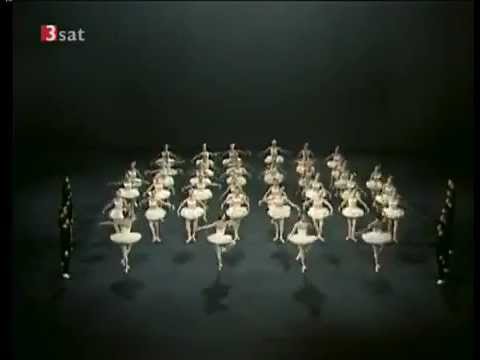
NYCB Vol. 18 No. 1 - Symphony in C
"If there ever was any doubt that Balanchine was the greatest choreographer of our time, this doubt was dispelled when the curtain came down on his Symphony in C. Here is a classic ballet that will go down in history as the finest example of this thrilling art form. “Symphonic ballet at its greatest, it builds with ever-mounting force to a thrilling cli-max. The fifty dancers on the stage at the same time not only give exhilaration to the final movement of the ballet, but mak
Lauryn Johnson
Apr 21


NYCB Vol. 17 No. 10 - Serenade, Jillana
Jillana in Serenade. Photo by Martha Swope, 1959 Jillana in I Remember Balanchine : “My fondest memories are of Serenade. I loved doing the Dark Angel. Even though there was no real story in it, I always had a story. I would make up different ones when I danced it, and I danced all the parts from top to bottom. I would make up stories about being in love with Nicky Magallanes and trying to get him away from whoever the other girl was, pulling and pushing. I made it into a lov
Lauryn Johnson
Jan 31


NYCB Vol. 17 No. 8 - Le Tombeau de Couperin
Wilhelmina Frankfurt & David Richardson. Photo by Martha Swope, 1976. NYPL In 1976 at the Maurice Ravel Festival, Balanchine premiered the ballet, “Le Tombeau de Couperin.” Anna Kisselgoff declared, this ballet was, “was the masterpiece of the [Ravel] Festival, a ballet that deserves to endure with the best of the Balanchine repertory and one whose creative and intellectual underpinnings are first-rate. “In ‘Le Tombeau de Couperin,’ Mr. Balanchine has used the 18th-century c
Lauryn Johnson
Jan 25


NYCB Vol. 17 No. 7 - Prodigal Son - Suzanne Farrell
Suzanne Farrell in her autobiography Holding on to the Air: "Prodigal Son tells the story of the fall and redemption of the biblical character, and its recent revival had provided Edward Villella with one of the greatest roles of his career. I asked Mr. B if I might dance the Siren who lures the Prodigal Son into the depths of greedy sensuality, a part originally designed for my beloved teacher Mme. Doubrovska . I was curious to explore a darker, more earthy role. Because at
Lauryn Johnson
Jan 23


NYCB Vol. 17 No. 6 - Prodigal Son, Edward Villella
The following text comes from Edward Villella's autobiography, Prodigal Son: Dancing for Balanchine in a World of Pain and Magic. The major breakthrough in my career came in 1960. I was cast in Prodigal Son, and in typical New York City Ballet fashion no one ever talked to me about it officially. I wasn't even aware that Prodigal was being revived. I was standing around waiting for a rehearsal to finish when Diana Adams turned to me and said, "Oh, congratulations." I said, "A
Lauryn Johnson
Jan 23


NYCB Vol. 17 No. 5 - Prodigal Son - Maria Tallchief
Maria Tallchief in her autobiography Maria Tallchief: America's Prima Ballerina: George Balanchine (left) Maria Tallchief & Jerome Robbins. Photo by Walter E.Owen, 1950. "Balanchine believed New York City Ballet needed a story ballet in its repertory and hoped Prodigal Son would serve the purpose. The ballet was a success at its premiere in 1929 and had never been seen in America. The Original Ballet Russe had presented David Lichine's version of the Prokofiev score, but it w
Lauryn Johnson
Jan 22


NYCB Vol. 17 No. 4 - Prodigal Son - Jerome Robbins
In 1950, Balanchine felt that NYCB needed a story ballet in its repertoire, so he revived his 1929 ballet Prodigal Son . He was not especially fond of the ballet because he was obliged to create it on Serge Lifar, who was Diaghilev's favored dancer in the Ballet Russe at the time. Balanchine didn't care for his dancing, but he also felt more personally inspired to create ballets that showcased women rather than men. Prodigal Son was the antithesis of his normal inclination: f
Lauryn Johnson
Jan 22


NYCB Vol. 17. No. 3 - Prodigal Son - Felia Doubrovska
From Balanchine's Ballerinas : Conversations with the Muses by Robert Tracy Robert Tracy: Prodigal Son must have been strange for you to learn. The role of the Siren is very far from the classical parts you were trained for. Doubrovska: Yes, it was difficult. But Diaghilev and Balanchine tell me to go home and think about my part. About the pas de deux with Lifar. And I think about a snake, which is not human, but which hypnotizes and be-witches. I used my eyes, and the move
Lauryn Johnson
Jan 21


NYCB Vol. 17 No. 2 - Prodigal Son - Prokofiev's Diary
Serge Lifar as the Prodigal Son. Photo by Roger Violett, 1929 The most complete account of the creation of the original Prodigal Son ballet is found in the diaries of Serge Prokofiev, the composer of the ballet. From his commission in October, 1928 to premiere in May, 1929, his entries describe the personal animosity that existed between himself and Balanchine, which partly explains why Balanchine was so apathetic about reviving the ballet for NYCB decades later. Excerpts fr
Lauryn Johnson
Jan 21


NYCB Vol. 17 No. 1 - Prodigal Son - Diaghilev
The libretto for Prodigal Son was written by Boris Kochno, the secretary and collaborator of Serge Diaghilev. This is his recounting of how the ballet came to be: Text from Diaghilev and the Ballet Russe by Boris Kochno: "In 1927 [...] Diaghilev asked Prokofiev to write a new ballet for the company. He had no specific theme to suggest, and his great preoccupation at the time was to find one. He wanted the new work to be simple and easy to follow, unlike Prokofiev's earlier b
Lauryn Johnson
Jan 21


NYCB Vol. 16 No. 11- Western Symphony
Suki Schorer. Photo by Martha Swope, 1964. Nicholas Magallanes, Suki Schorer, Gloria Govrin, Frank Ohman 1964. Photo by Erio Piccagliani...
Lauryn Johnson
Oct 7, 2025


NYCB Vol. 16 No. 9 - Episodes
Bart Cook and Allegra Kent in Episodes. Photo by Martha Swope. From Once a Dancer... by Allegra Kent: "When Balanchine created the part...
Lauryn Johnson
Sep 28, 2025


NYCB Vol. 16 No. 8 - Western Symphony
Gloria Govrin and Frank Ohman. Photo by Martha Swope, 1965. From -- Balanchine's Dancing Cowboy by Frank Ohman "[Balanchine] fostered...
Lauryn Johnson
Sep 27, 2025


NYCB Vol. 16 No. 7 - Donizetti Variations
Merrill Ashley in Donizetti Variations. Photo by Martha Swope, 1979. Said one dancer of Donizetti Variations, ‘It’s like an endless...
Lauryn Johnson
Sep 26, 2025


NYCB Vol. 16 No. 5 - Donizetti Variations
Jacques d'Amboise and Melissa Hayden. Photo by Fred Fehl, 1960. "In Holland, a country I love with most of my heart, you don't have to...
Lauryn Johnson
Sep 19, 2025
bottom of page