

NYCB Vol. 19 No. 10- The Four Temperaments, Original Costumes

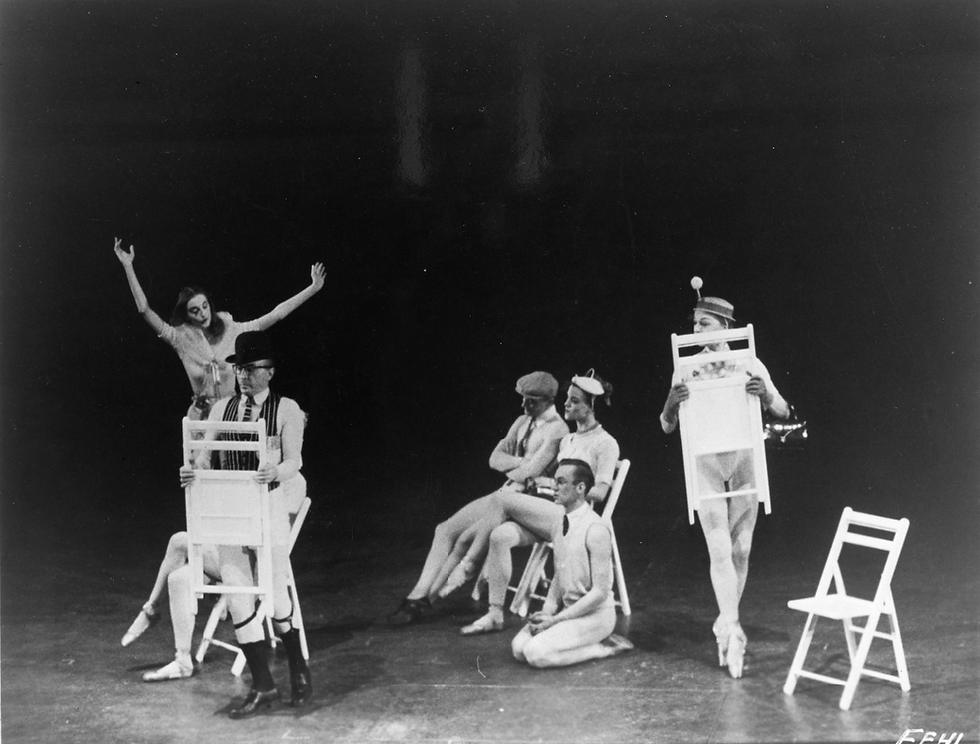
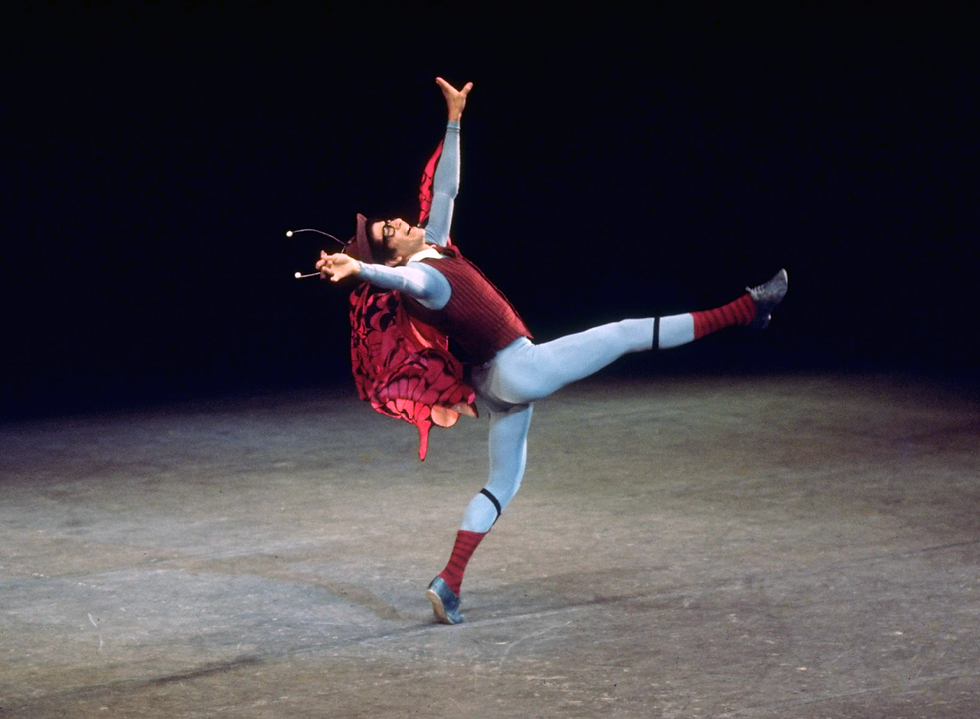
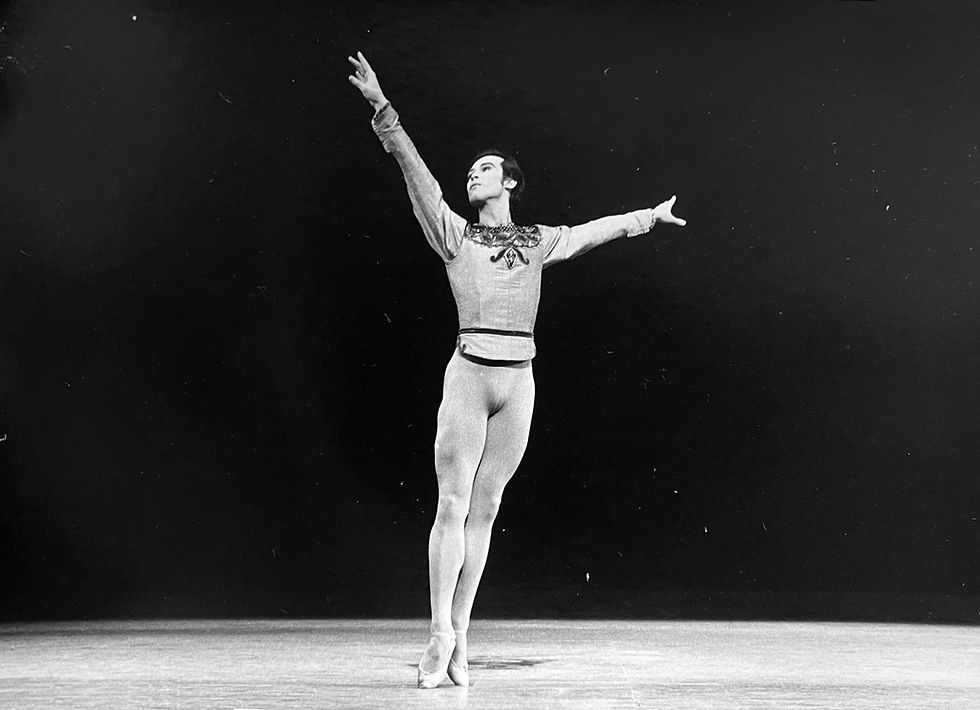
The original costumes for The Four Temperaments did not last long. The ballet premiered in 1946 and the costumes were discarded in 1951. Today the ballet is performed in black leotard and skin-toned tights. In this post I have gathered all of the photos I can find of the original costumes in order of appearance in the ballet, listed with the original principals dancers of each section.
"Tchelitchev suggested Kurt Seligmann, an erudite painter with a big library of alchemy and magic lore, for decorations. Using a blend of personal symbolism and arcane ikonology, encouraged by Tchelitchev's own insistence on visual aspects, Seligmann swathed our dancers in cerements, bandages, tubes, wraps, and tourniquets, so that dancing became more a dress parade than a display of human bodies in motion. (They were soon rejected for practice dress, as has been the case with Concerto Barocco, Apollo, and other works of overwhelming choreogrpahic rather than atmospheric interest." --Thirty Years Lincoln Kirstein's The New York City Ballet by Lincoln Kirstein
"Ballet Society's premiere performance took place in the auditorium of Manhattan's Central High School of Needle Trades on November 20, 1946. On the road with Ballet Russe, I heard it by phone from George and some of the dancers. It sounded thrilling. [...] The main event, however, was the unveiling of The Four Temperaments. From what everyone said, and from the little I had seen myself, I could tell it was one of George's greatest works, a masterpiece destined to influence just about everything that came after it. On the first night, the audience knew they'd witnessed something historic.

"Everyone agreed that the only flaw was the costumes, designed by artist Kurt Seligmann. In the "Second Theme" Elise Reiman wore an unattractive tunic decorated with bright red fabric swatches cut out to resemble sparks; the bonnet Gisella Caccialanza wore in the "Third Theme" covered so much of her head that it blocked her peripheral vision; and as Sanguinic, Mary Ellen wore a costume with one puffy sleeve and a headpiece covered with small spherical shapes resembling Ping-Pong balls.
"After the premiere, George tried to reason with Mr. Seligmann. 'Can't we modify and cut away fabric?' he asked him. 'Costumes are blocking choreography. No one can see steps. No one can see Mary Ellen!'
"But the artist was adamant, 'If we cut fabric and change costume, yes, we will see choreography, but then no one will see the designs, no one will see Seligmann!' The costumes stayed."
--America's Prima Ballerina by Maria Tallchief
“The spectators loved every minute of The Four Temperaments. They even accepted Seligmann’s cumbersome back drops with painted fabrics that seemed to weigh tons yet floated in the air, and the overrate and uncomfortable-to-dance-in costumes, which detracted from the choreography.”
—The New York City Ballet: The First Twenty Years by Anatole Chujoy

"The notorious costumes and décor, of astounding virtuosity in themselves, obscured the dance design, and were, in addition, not constructed with the dancing body in mind.
“There are doleful tales of various obstructions-mittens (which made partnering difficult), breastplates that knocked together, long skirts covering legs, cumbersome headdresses, including some bonnets that looked like sunbursts, and a horn—all this and more, plus décor, were crowded onto the small high-school stage. The Sanguinic ballerina seemed to be wrapped in bandages, the Phlegmatic costume was considered to represent a mushroom, or possibly Don Quixote. Says [Fred] Danieli, "The costumes arrived, as usual, about 30 minutes before the curtain went up. Balanchine took a pair of scissors and went around snipping everywhere." The easel painter as full collaborator had become the painter as tyrant.
-- Repertory in Review: 40 Years of the New York City Ballet by Nancy Reynolds
THEME 1 - Beatrice Tompkins and José Martinez
[No Photo Available]
THEME 2 - Elise Reiman and Lew Christensen
(left) Elise Reiman and Lew Christensen. Photo by Dwight Godwin, Ballet Society
(right) Elise with Herbert Bliss. Photo by George Platt Lynes
THEME 3 - Gisella Caccialanza and Francisco Moncion

FIRST VARIATION: Melancholic, William Dollar; Georgia Hiden, Rita Karlin, 4 women
[No Photo Available]
SECOND VARIATION: "Sanguinic", Mary Ellen Moylan, Fred Danieli, 4 women
Mary Ellen Moylan and Fred Danieli
Photos by Larry Colwell, 1946. Library of Congress
Maria Tallchief and Nicholas Magallanes in the Sanguinic variation. Photos by George Platt Lynes
THIRD VARIATION: "Phlegmatic" Todd Bolender, 4 women
Todd Bolender. Photos by Carl Van Vechten
FOURTH VARIATION: Choleric, Tanaquil LeClercq, 3 "'Theme" couples, Moylan, Danieli; Dollar, Bolender, ensemble
[No Photo Available]
Comments